
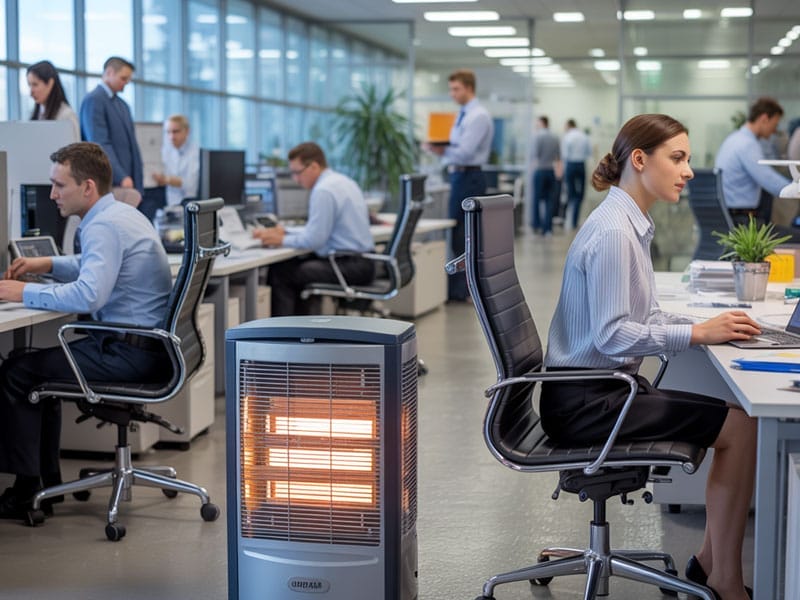
Space Heater Safety For Commercial Buildings
Ever walk a jobsite or office suite in January and spot a “temporary” space heater that looks like it has been there since Thanksgiving?
If you manage winter work in Indiana, Illinois, or Kentucky, you already know how fast those portable heaters multiply in offices, warehouses, and break rooms. One cold complaint turns into three heaters.
Three heaters turn into tripped breakers. Tripped breakers turn into someone running an extension cord to the next room.
This guide is here to help you stop that chain reaction before it becomes a fire safety headache.
I will show you the circuit math that matters, the policy moves that actually stick, and the daily checks your team can run without slowing the day down.
Key Takeaways
A typical 120V portable heater rated at 1,500 watts pulls about 12.5 amps. If it runs for 3 hours or more, it qualifies as a continuous load under the National Electrical Code. A 15-amp circuit is commonly treated as 80% usable (about 12 amps), so one heater can max out the circuit all by itself.
Set a hard rule: no extension cords and no power strips for heaters. Require units that carry a recognized testing lab mark (UL, ETL, or similar) and have automatic tip-over shutoff. Keep a 3-foot clearance zone from combustibles.
The numbers are serious. The U.S. Consumer Product Safety Commission estimates portable heaters are involved in an average of 1,600 fires per year, resulting in approximately 70 deaths and 150 injuries annually. Most of these are not heater defects. They are people and power management problems.
Frozen-pipe panic is a classic overload trigger. Fix the building issue first (setbacks, insulation gaps, failed heat, drafty loading docks) before you “solve” it with a heater pileup.
Use a two-part fix: policy plus infrastructure. Short, enforceable rules for approval, labeling, and shutdown. Dedicated circuits where heaters are a recurring need. Panel capacity checks before winter hits.
Why Space Heaters Cause Winter Electrical Fires

Portable heaters are convenient, and that is exactly why they become a building-wide risk. People move them, hide them under desks, and plug them into whatever outlet is closest.
Most “space heater incidents” are not heater defects. They are usage failures that compound until something catches fire or trips offline.
Here are the three reasons winter gets ugly in commercial buildings:
High current draw on general-purpose receptacle circuits. A single 1,500W unit eats up most of a 15-amp branch circuit’s practical capacity when it runs for hours. Add a coffeemaker or a battery charger on the same circuit and you are over the line.
Heat plus combustibles. Paper, packaging, pallets, rags, and office clutter turn a small clearance mistake into a flame path. The 3-foot rule exists because fires need fuel, and most workplaces have plenty of fuel within arm’s reach of a desk.
Bad plug habits. Power strips, extension cords, cord damage, and “temporary” setups that become permanent. Connections heat up, insulation gets pinched under chair legs, and the damage becomes a spark point.
If you want one simple win, require a quick approval step before any heater gets plugged in. When people have to ask, the heater count drops.
Common Space Heater Safety Failures in Commercial Buildings
You can have great equipment and still end up with a fire if usage is uncontrolled. Most sites do not fail because they lacked a rule. They fail because no one enforced the rule on a cold Monday morning.
One OSHA expectation to keep in mind: listed or labeled equipment must be used per its listing instructions (29 CFR 1910.303(b)(2)).
That matters because many heater manuals prohibit extension cords, power strips, and unattended operation. If someone ignores the manual, you lose the protection the listing was supposed to provide.
Using Extension Cords or Power Strips
Treat this as a red-tag issue. Remove from service on sight.
The risk is not just overload. Connections heat up over time, cords get pinched under furniture, and the insulation damage becomes a spark point. Power strips rated for computers are not rated for 12.5 amps of continuous resistive heat.
Fix: Plug directly into a wall outlet. No exceptions.
Ignoring the 3-Foot Clearance Rule
This is a real, widely used fire-prevention guideline, not a suggestion. Keep heaters at least 3 feet away from paper, boxes, coats, pallets, curtains, and anything else that burns.
The common miss is heaters pushed under desks where paper and trash bins live. Ban under-desk placement in writing and enforce it on every walk-through.
Fix: Mark approved heater “parking spots” on the floor in break rooms and shipping offices. Make compliance visible.
Leaving Heaters Unattended
If a heater is running in an empty room, you are taking risk for zero benefit.
Build shutdown into the closeout routine and treat violations like any other safety issue. Off when the area is unoccupied. Off and unplugged at end of shift.
Fix: Add heater shutdown to the same checklist that covers doors, lights, and equipment lockup.
Allowing Non-Certified Equipment
Only allow heaters tested and certified by a recognized lab. UL is the label most people recognize, but OSHA’s Nationally Recognized Testing Laboratory program covers multiple labs including ETL, CSA, and others.
Non-certified heaters often miss basic protections like reliable tip-over shutoff and overheat shutoff. If someone brings a heater from home with no certification mark, it does not get plugged in.
Fix: Keep a short approved-model list so purchasing does not guess.
Placing Heaters on Unstable or Flammable Surfaces
Heaters belong on flat, hard, non-flammable surfaces. Not on desks, rugs, cardboard, or stacked materials.
In warehouses, the “quick warm-up spot” is often near storage. That is a red flag because combustibles and forklifts turn a heater into both a fire hazard and a tip hazard.
Fix: Create specific approved locations by room type. Do not allow heaters in storage rooms, mechanical rooms, or areas with flammable liquids.
The Circuit Math Behind Space Heater Overloads
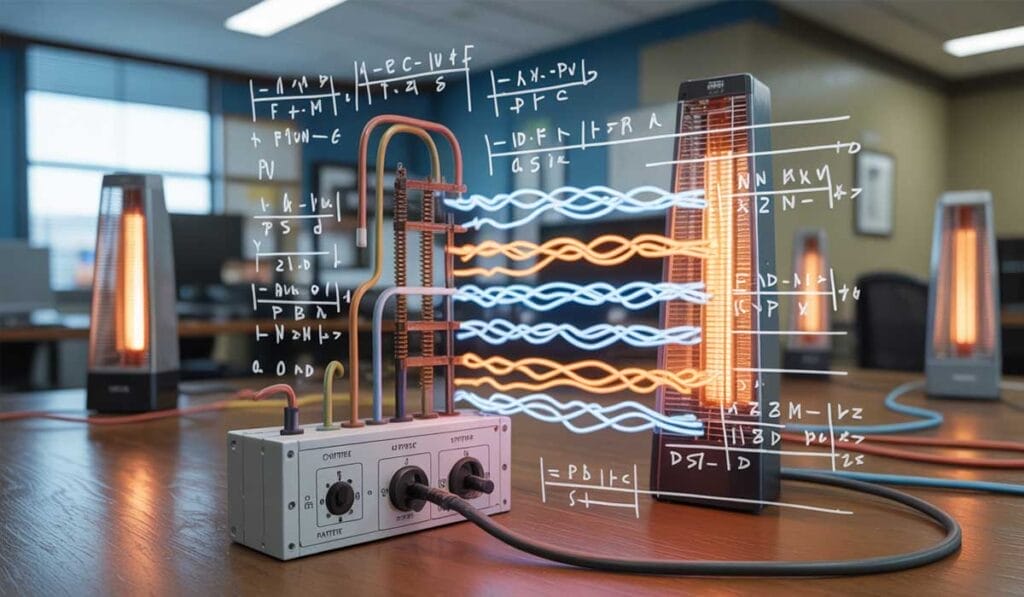
Most portable electric heaters are simple resistive loads. They do not “sip” power. They pull close to their nameplate draw the entire time they are heating.
Here is the mistake that causes the most trips and the most overheated wiring: people plan loads based on the breaker handle rating, not on how long the load runs.
The NEC concept of continuous load matters here. A continuous load is one expected to run for 3 hours or more, and branch circuits are typically sized so continuous loads use only about 80% of the breaker rating.
| Branch Circuit | Continuous Target (80%) | Watts at 120V | What That Means for a 1,500W Heater |
|---|---|---|---|
| 15A | 12A | 1,440W | One 1,500W heater exceeds the continuous target by itself |
| 20A | 16A | 1,920W | One 1,500W heater fits, but you cannot stack other loads casually |
| 30A (208V or 240V) | 24A | Varies | Often used for larger equipment, but connections still need winter checks |
Quick Field Workflow
Identify the circuit. Confirm which receptacles land on which breaker. Do not guess.
Check what else is on it. Copiers, microwaves, battery chargers, and task lighting add up fast.
Assume long run time. If a heater will run most of the day, treat it as continuous.
Fix with design, not hope. Add a dedicated receptacle circuit where the need is real, or address the comfort problem at the HVAC, envelope, or controls level.
How Frozen Pipes Lead to Space Heater Overload Chains
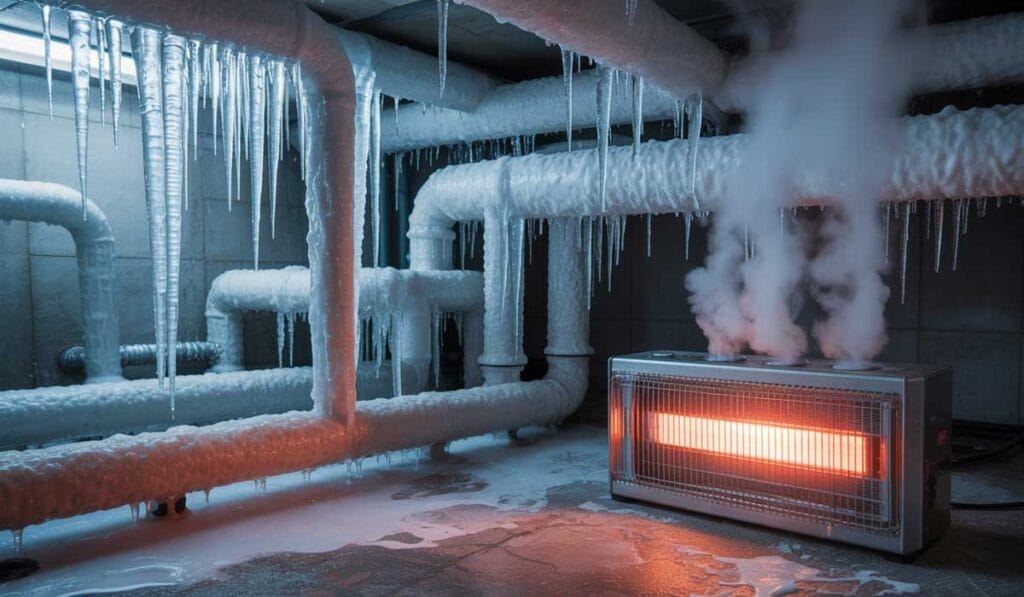
Frozen-pipe prevention is where “heater chains” start, especially in vacant suites, stairwells, dock corners, and exterior wall chases.
This is one of the most common winter scenarios contractors in Indianapolis, Louisville, Springfield, and Lexington deal with between December and March.
The pattern looks like this: Someone finds a cold spot. They plug in a heater. It trips a circuit. They “solve” it by moving the heater to another outlet.
Then they add a second heater. Suddenly, you have a roaming load problem across multiple circuits, and the original frozen pipe risk is still there.
Start With Building Fixes
The fix is not more heaters. The fix is maintaining consistent building heat so pipes never freeze in the first place.
Control the setback. Unoccupied does not mean unheated. Tune the temperature strategy for cold snaps, especially in buildings with older controls or no building automation.
Seal and insulate the obvious leaks. Dock doors, penetrations, and exterior corners are repeat offenders in Midwest commercial buildings.
Use the right tool for pipe protection. If a run truly needs protection, heat trace and insulation are more stable than a floor heater pointed at a wall.
If you still need portable heaters as a temporary measure, treat them like a planned load. Assign locations and circuits, then label them so the next person knows what is happening.
Dedicated Circuits and Electrical Upgrades That Solve the Problem
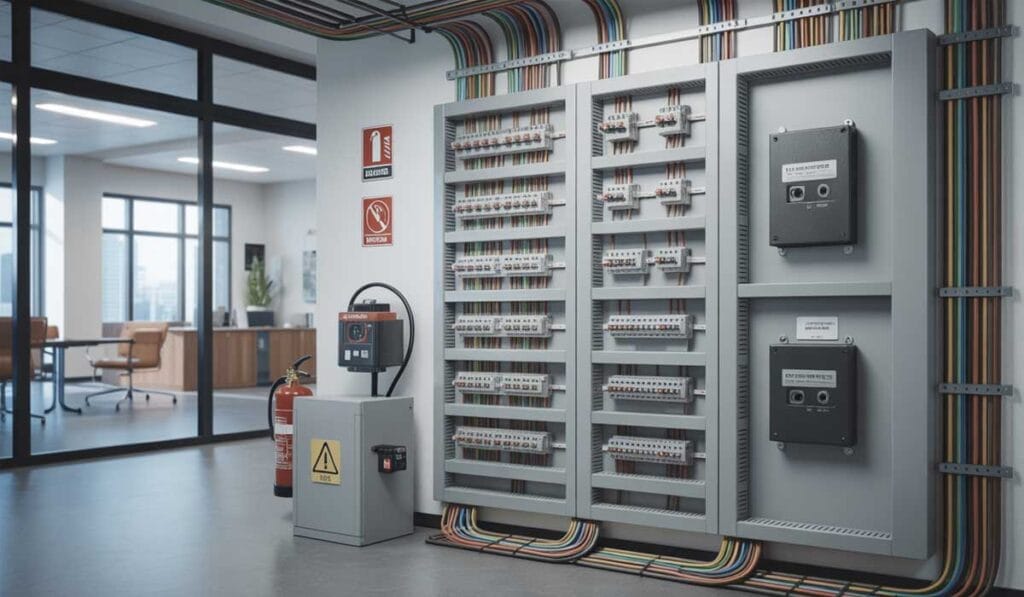
If portable heaters are a recurring operational need, you have an electrical design problem, not a behavior problem.
Dedicated circuits are the cleanest fix because they remove the mystery load from general receptacle circuits and reduce nuisance tripping.
Here is what “doing it right” looks like for most commercial buildings:
Install dedicated receptacle circuits for approved heater locations, with clear panel labeling and a site map that maintenance can follow.
Match wire and device ratings to the circuit. Avoid mixing “whatever parts are on the truck” into a heater solution.
Verify panel capacity with real data. If tenants keep adding plug loads, update load calculations and panel schedules before winter.
Build an electrical maintenance plan. NFPA 70B (2023) moved from recommended practice language to a standard with “shall” requirements for documented electrical maintenance programs where adopted. Use that as a practical framework for inspections, records, and repair priorities.
One tip for contractors: if you can eliminate the need for plug-in heaters with air balancing, envelope fixes, or control tuning, the ROI usually beats adding circuits across a whole floor. Solve the root cause when you can.
Best Practices for Facility Managers

You do not need a 30-page policy. You need a short policy that gets followed on a cold day.
Insurance risk teams and fire marshals tend to agree on the same basics: direct-to-wall plug, 3-foot clearance, certified equipment, and shutdown when unattended.
One-Page Standard for Most Sites
Approval required. No personal heaters without facilities sign-off.
Certified equipment only. Accept recognized testing lab marks (UL, ETL, CSA). Reject everything else.
No cords, no strips. Plug directly into a wall outlet.
Clearance distance. Keep 3 feet clear on all sides. Keep heaters out of storage areas.
Daily shutdown. Off and unplugged at the end of every shift.
Accountability. If a heater violates rules, it gets removed. No debates in the hallway.
Daily Inspection Checklist
Add heater checks to the same daily walk that already covers exits, eyewash stations, and housekeeping. A 3-minute check catches most problems.
| Check | Pass Standard | Fail Action |
|---|---|---|
| Cord and plug condition | No cuts, frays, or loose blades | Remove from service |
| Power source | Direct to wall outlet | Unplug and correct immediately |
| Clearance distance | 3-foot zone clear | Move heater or clear combustibles |
| Placement | Stable surface, not in traffic path | Relocate or remove |
| Shutoff features | Tip-over and overheat shutoff functional | Remove from service |
Minimum Features for Commercial Use
When purchasing heaters for facility use, require these features at minimum:
- Tip-over shutoff
- Overheat shutoff
- Visible power indicator
- No exposed heating element for office-type spaces
- Recognized testing lab certification mark
Frequently Asked Questions
Cost and Value Questions
How much does it cost to add a dedicated circuit for a space heater? Adding a dedicated 20-amp circuit typically costs between $200 and $500 depending on the distance from the panel, accessibility, and local labor rates. In commercial buildings with long runs or limited panel space, costs can reach $800 or more. Compare that to the cost of a fire, an OSHA citation, or a week of nuisance trips during your busiest season. For buildings with recurring heater needs, dedicated circuits pay for themselves in reliability and reduced risk.
Is it worth upgrading panel capacity just for winter heater loads? If your building trips breakers every winter and tenants keep adding heaters despite your policies, you have outgrown your electrical infrastructure. A panel upgrade or subpanel addition typically costs $1,500 to $4,000 for commercial buildings, but it solves the problem permanently instead of chasing it every December. Contact New Century Sales at (317) 334-9697 for panel and breaker recommendations from manufacturers who understand Midwest commercial applications.
What is the real cost of a space heater fire? Beyond the obvious property damage, a space heater fire triggers insurance claims, potential OSHA involvement, business interruption, and liability exposure if someone is injured. The CPSC estimates portable heaters cause approximately 70 deaths and 150 injuries per year nationally. Even a small fire with no injuries can result in tens of thousands in cleanup, repairs, and increased insurance premiums.
How long does it take to implement a space heater safety policy? You can have a basic policy written, communicated, and enforced within one week. Day one: draft and distribute the policy. Day two: walk the building and remove non-compliant heaters. Day three: mark approved locations. Days four through seven: train supervisors and start the daily log. The policy itself takes an hour to write. The enforcement takes ongoing attention.
When should I start preparing for winter heater issues? Start in early fall, ideally late September or October in Indiana, Illinois, and Kentucky. This gives you time to identify problem areas, add dedicated circuits where needed, tune HVAC systems, and communicate policies before the first cold snap. Waiting until December means you are reacting instead of preventing.
What is the process for getting a space heater approved in a commercial building? A good approval process includes four steps: employee submits a request identifying the location and reason. Facilities checks the circuit capacity and confirms the location meets clearance and placement rules. If approved, the heater gets tagged with an approval sticker and added to the inspection log. If denied, facilities explains why and offers an alternative solution (HVAC adjustment, dedicated circuit, or building repair).
What is the difference between a 15-amp and 20-amp circuit for heater use? A 15-amp circuit at 120V provides about 1,800 watts total capacity, but only 1,440 watts for continuous loads (the 80% rule). A 20-amp circuit provides about 2,400 watts total and 1,920 watts continuous. A typical 1,500W space heater can max out a 15-amp circuit by itself but fits more comfortably on a 20-amp circuit with room for other small loads. If heaters are a recurring need, spec 20-amp circuits for those locations.
Space heaters vs. HVAC fixes: which is the better investment? HVAC fixes address the root cause and provide permanent comfort without adding electrical load or fire risk. Space heaters are a temporary patch that creates ongoing management overhead, tripping risk, and liability. If you are spending staff time managing heaters every winter, the math usually favors fixing the building once. Get quotes for air balancing, envelope sealing, or supplemental HVAC before committing to heater infrastructure.
Oil-filled radiator heaters vs. ceramic heaters: which is safer? Oil-filled radiators run at lower surface temperatures and retain heat longer after cycling off, which reduces fire risk near combustibles. Ceramic heaters heat up faster and cool down faster, which some users prefer. Both types can be used safely if they carry certification marks and include tip-over and overheat shutoffs. The bigger safety factor is usage behavior, not heater type.
How do I stop employees from bringing personal heaters to work? Combine policy with alternatives. Publish a clear rule that personal heaters are not allowed without approval. Then address the comfort complaints that drive heater use: fix drafts, adjust thermostats, and provide approved heaters for genuinely cold areas. When people are comfortable, they stop smuggling heaters. When the policy has teeth and the alternative is reasonable, compliance improves.
What should I do if I find a heater plugged into an extension cord? Unplug it immediately and remove the extension cord from the area. Document the finding with date, location, and what you did about it. Talk to the employee or tenant about the rule and why it matters. If the location genuinely needs a heater, solve it correctly with a wall outlet or dedicated circuit. Repeat violations should have consequences.
Why do my breakers keep tripping when we add space heaters? You are exceeding the circuit’s continuous load capacity. A 1,500W heater on a 15-amp circuit leaves almost no room for anything else. The fix is either moving the heater to a less-loaded circuit, removing other loads from that circuit, or installing a dedicated circuit for the heater. Upgrading to a higher-amp breaker without changing the wire is not a fix and creates a fire hazard.
Can I use a heavy-duty power strip for a space heater if it has a breaker? No. Even heavy-duty power strips are not rated for the sustained high-current draw of a space heater running for hours. The internal connections and cord are weak points that heat up under continuous load. Heater manufacturers explicitly prohibit power strip use in their manuals, and ignoring that voids the safety listing. Plug directly into a wall outlet.
How do I identify which outlets are on which circuit? Turn off one breaker at a time and test outlets with a plug-in tester or lamp to see which ones go dead. Label the outlets with the breaker number when you find them. For faster results, use a circuit tracer tool that lets you identify circuits without cutting power. Once mapped, you can make informed decisions about where heaters can safely run.
What should a space heater inspection include? Check five things: cord and plug condition (no cuts, frays, or damage), power source (plugged directly into wall outlet), clearance (3 feet from combustibles on all sides), placement (stable surface, not in walkway), and safety features (tip-over and overheat shutoffs functional). Log pass or fail for each heater, and remove any unit that fails from service immediately.
What if a tenant refuses to follow the space heater policy? Document the violation in writing and issue a formal notice citing the specific policy and the safety risk. If the lease includes compliance requirements for fire and safety codes, reference those. Escalate to property management or ownership if needed. Ultimately, the building owner has the authority and liability, and a tenant who creates fire risk is a tenant who needs to comply or face consequences.
What should I do if I smell burning near a space heater? Unplug the heater immediately without touching the heating element. Check the outlet and plug for scorch marks or melted plastic. Do not plug the heater back in. If the outlet shows damage, shut off the circuit at the breaker and have an electrician inspect before re-energizing. A burning smell means something is overheating, and the next step is often a fire.
Is it safe to run a space heater overnight in a commercial building? No. Heaters should be off and unplugged whenever the area is unoccupied. Overnight operation means hours of unattended runtime with no one to notice a problem developing. If a space needs overnight heat, solve it with the building HVAC system or a permanently installed heating solution that is designed for unattended operation.
Space heaters are not automatically bad. Uncontrolled space heaters are.
Start with the simple rules that prevent most fires: wall outlet only, 3-foot clearance, certified units, and shutdown when unattended. Then do the infrastructure work that keeps winter stable: map circuits, stop overload chains, and add dedicated circuits where the need is real.
If you take one thing from this guide, make it this: treat heaters like a planned electrical load and a controlled piece of equipment, not a personal convenience that shows up whenever someone gets cold.